Save the Dragons!
Welcome to Emberheart, the Isle of Dragons. Home of dragonkind, the island has been invaded by vicious poachers, and the king has sent you and the other players to protect them at all costs. In this 2-4 player resource management and worker placement game, you’ll recruit heroes, free dragons, and foil the poacher's plans, claiming glory in competition with the other players until one of you emerges victorious.
Overview
On your turn, you’ll place a crest and hirelings to various locations, like the hero’s guild, the poachers’ camp, or the garrison. Or you can gain help from the King’s Ambassador by recruiting one of their aides. Play continues around the table until all the aides have been taken, then locations are resolved one at a time, and the poachers perform a raid, completing the round. Throughout the game, you’ll recruit heroes, rescue dragons, train up your companion, and complete missions. At the end of five rounds, the game ends, and the player with the most glory wins.
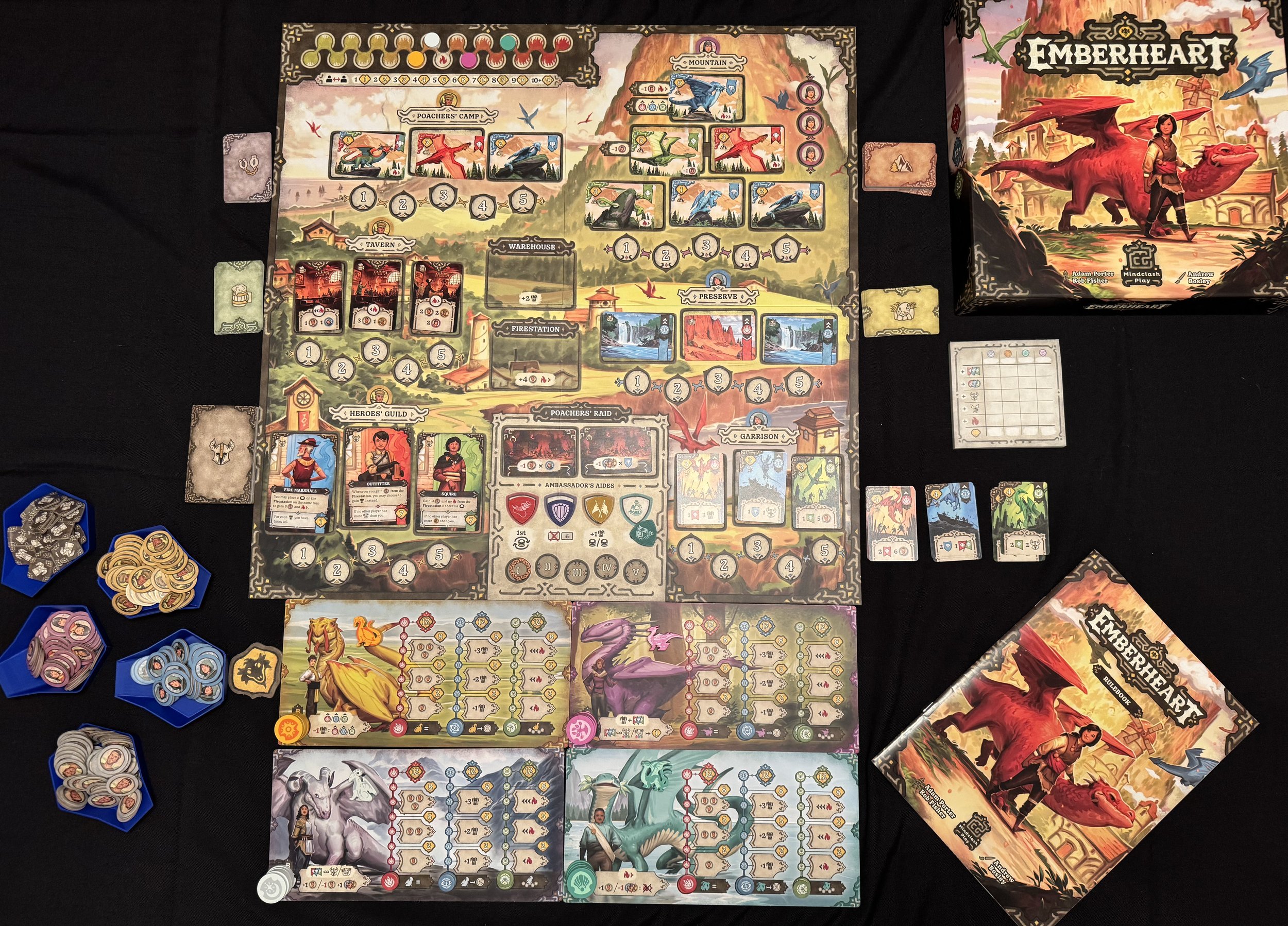
A beast at the table
Containing a main board, tokens, player boards, and oh so many cards, the game takes up a lot of space on the table, but with artwork this gorgeous, who would complain? While the various decks don’t contain a vast number of cards each, the fact that there are seven of them ensures that you’ll likely never be presented with exactly the same options, no matter how much you play.
A homage to RPGs
With the Tavern and Hero’s Guild locations, sending ‘parties’ to take actions, and searching the mountain for dragons, there is no doubt that the designer drew heavily on fantasy RPGs (Role-Playing Games), but there is still plenty that is unique in the world presented.
Emberheart is not a slap-and-paste generic fantasy, and while familiar, the game’s mechanics and options make it feel like a world rich with its own flavor and concepts.
Just another Worker Placement?
On your turn, you place one of your five crests (workers) at a location to take that action—just like every other worker placement, right? Wrong! This is where Emberheart sets itself apart with excellent twists on this familiar mechanic.
Firstly, instead of playing a crest, you can take an aide token, each of which grants a unique bonus. These include becoming the first player, deciding which raid the party will face, or gaining resources.
Secondly, when you place a crest, you don’t generally take the action immediately; you’ll only resolve it at the end of the turn, after all players have committed to their actions, and what you’ll get depends on the strength of the party you sent with the crest.
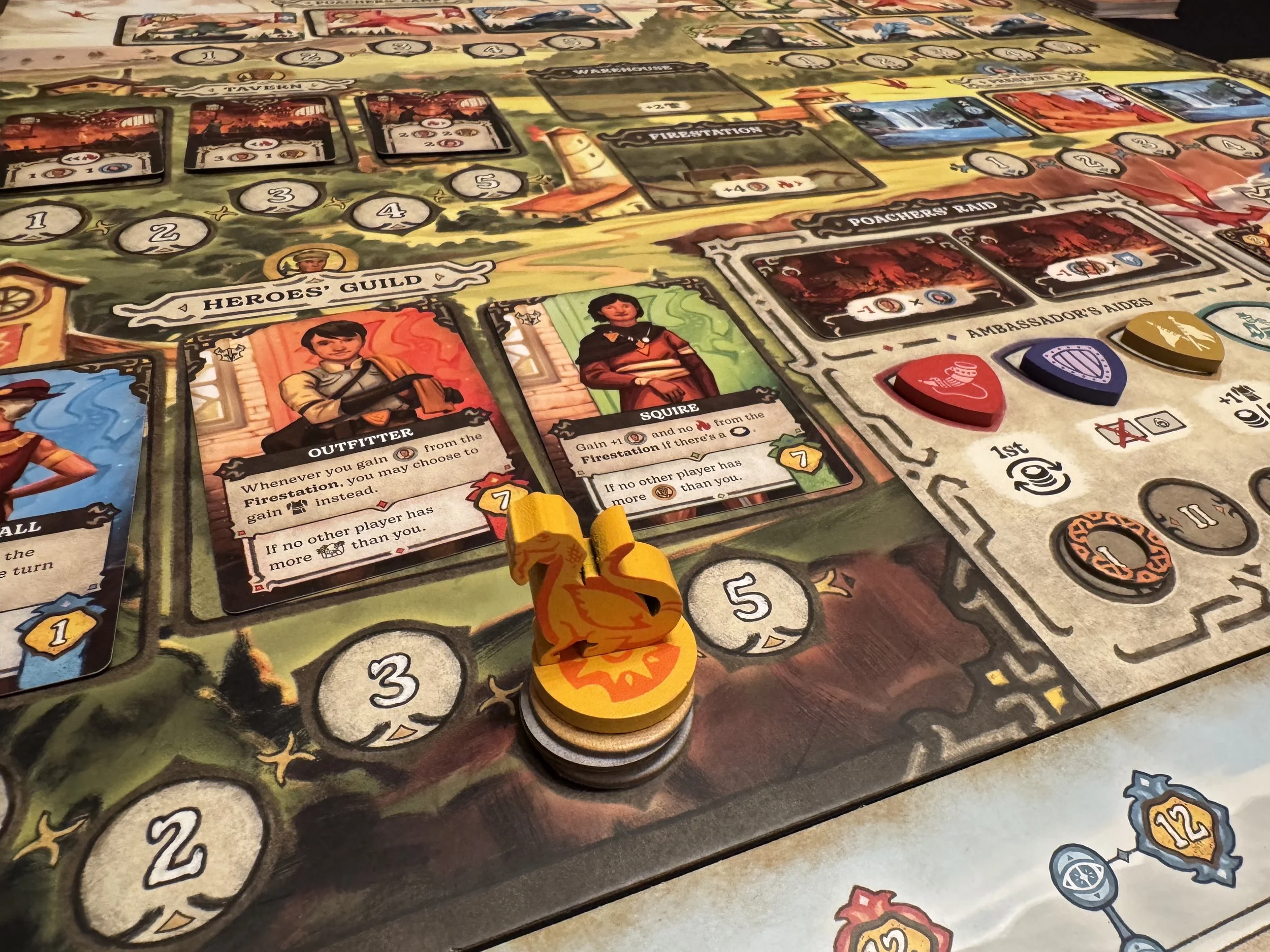
Send a Party
In most locations, when you place a crest, you must also send a party of hirelings. The bigger the party, the earlier you’ll get to take your action when the location is resolved. That might mean the difference between having first pick, last pick, or none at all. Conversely, a large party depletes your resources, and you’ll need to spend future actions recruiting more hirelings to form new parties.
Hirelings come in two varieties. Grunts can be used anywhere but are discarded afterward. Experts (Rangers, Scouts, and Wardens) can only be used in certain locations but are typically returned after use. There is a great tension in the game where you must make decisions about what hirelings you send where, and how many and what types you’ll send to each location.
Then there are the dragons…
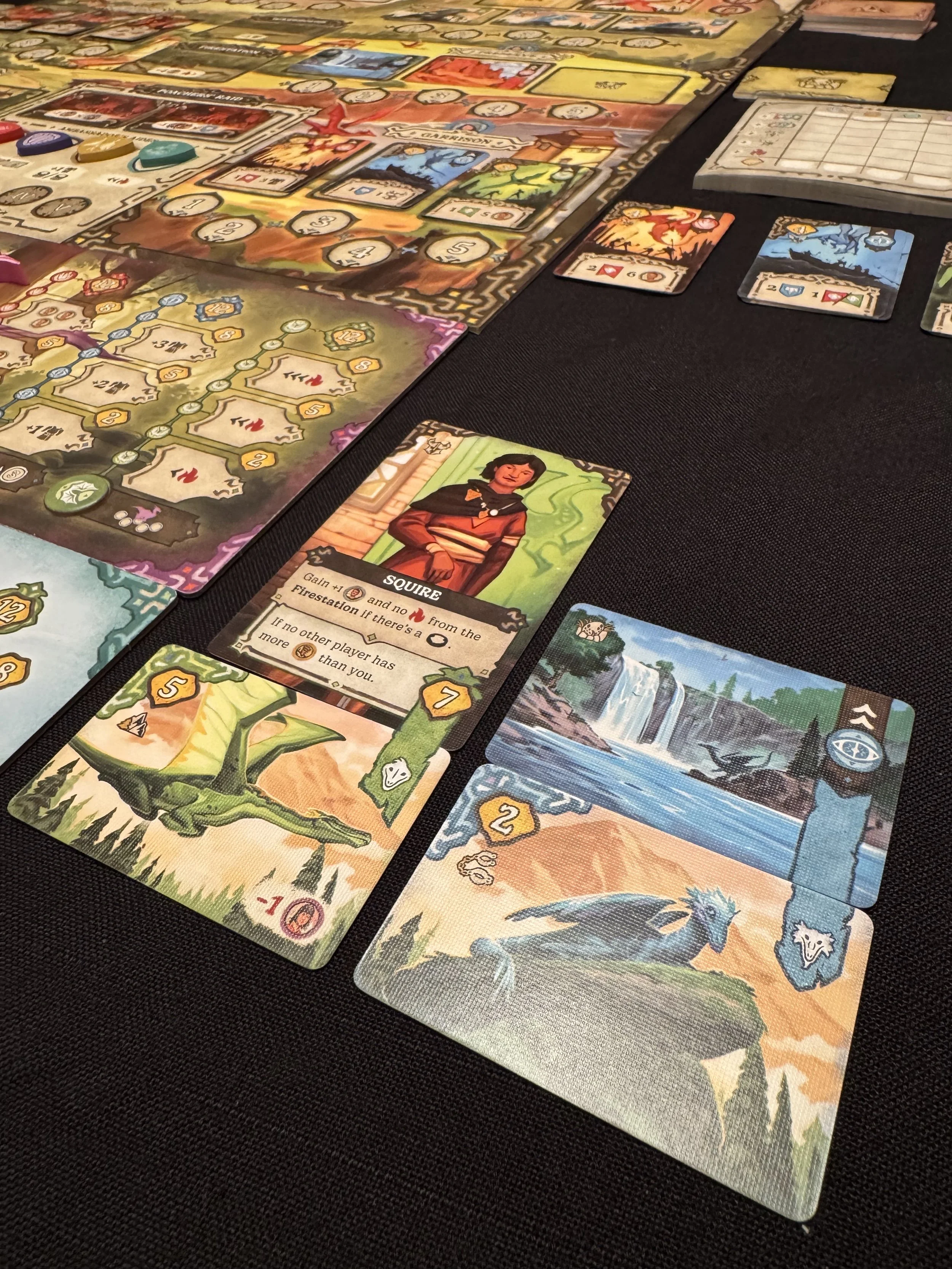
Dragon Companions and connections
You did not come to the isle of Emberheart alone. With you came a dragon companion, ready to aid you in saving its kind. Each has a unique ability and three skills that you can train over the course of the game. These provide benefits when added to a crest, but these are only gained when they are placed with a party of strength three or at locations where they are the first dragon, furthering your options when considering what action to take and when.
The dragons you rescue also come to your aid. They can be connected with your recruited heroes of the same color, activating the hero’s abilities and goals for end-game scoring. Or you can send them to a matching sanctuary to improve your companion’s skills.
Turning up the heat
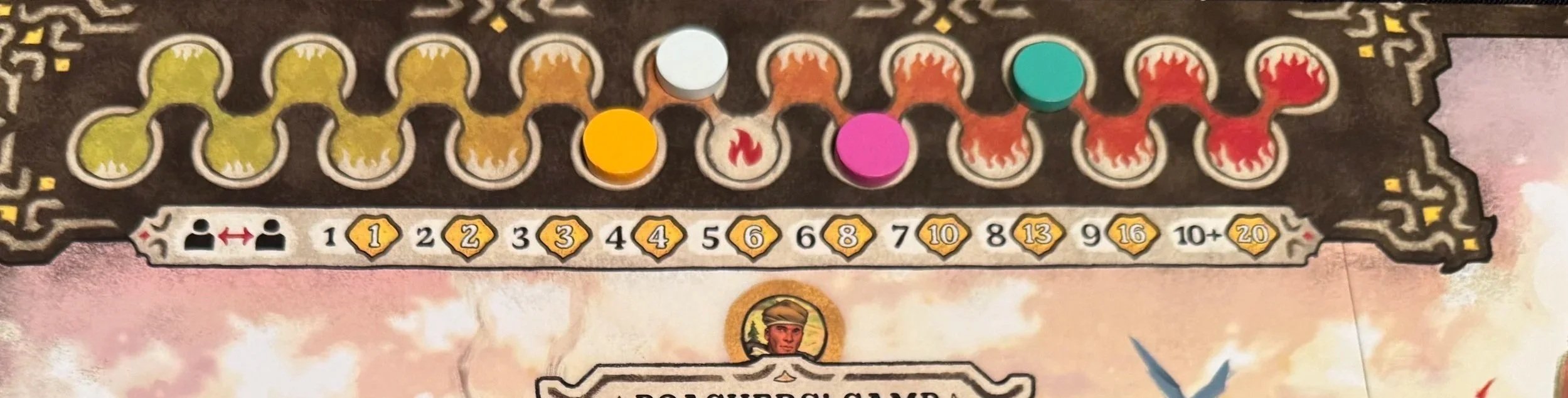
Alongside points for dragons rescued, heroes who’ve been paired with a dragon, and other cards you’ve completed, there is one other curious way to earn glory and ultimate victory—Flame.
Various actions increase or decrease your Flame, and at the end of the game, your position can gain you glory, so it is worth managing carefully. What makes this mechanic interesting is that your exact position doesn’t matter; it's your position in relation to the other players that does. The player with the highest flame gains no glory; then the other players gain glory based on how far they are from that player.
Incoming Raid
For all that they are the thematic reason you go to the island, the raiders are only a very light part of the mechanics. At the conclusion of each round, players face one of two raid cards. These are simple and deplete your hirelings based on different criteria. If you cannot pay the required hirelings, you must increase your flame.
Burning for more
I’ve had a lot of fun playing Emberheart and love what it brings to the table: new mechanics and a fresh fantasy world that still feels familiar. I enjoy that there are several ways to approach the game, and it has been exciting to explore different strategies and see how your opponents' choices shape the game.
Player interaction is indirect, and the conflict is highly abstracted, and the art style is soft yet filled with earthy tones, giving it a unique look and feel. I think of this as a cozy game (despite its conflict and the need to strategize), with maybe just a slight risk of getting burnt.
This post was originally produced for BoxKing